
Vol.4, Issue 4, 2026
Infrastructure Quarterly

Punj Lloyd Institute of Infrastructure Management is established within the Indian School of Business as a specialist Institute to support its Infrastructure agenda. The Punj Lloyd Institute of Infrastructure Management seeks to help create top quality management capacity for the Infrastructure and Real Estate Sectors.
Vision
To create high-quality leadership and management capacity for the infrastructure and real estate sectors and create an understanding of the sustainability dimensions impacting the sectors, by delivering quality education, contextual research, and continuous outreach.
Mission

- Create top-quality educational and training programmes
- Facilitate learning through online programmes
- Undertake research that is contextual to the Indian and developing country context
- Develop tools and decision support systems to support the infrastructure practice
- Undertake continuous outreach to support the sector
- Serve as a "Go to" place for the infrastructure sector in India and abroad.
The Punj Lloyd Institute undertakes various initiatives to guide the infrastructure sector toward efficient and sustainable development through research initiatives, knowledge-sharing events, and training public officials and industry professionals. To meet its vision, the institute works closely with corporates in three verticals, Education, Outreach, and Research.
Education
Advanced Management Programme for Infrastructure: Co2026
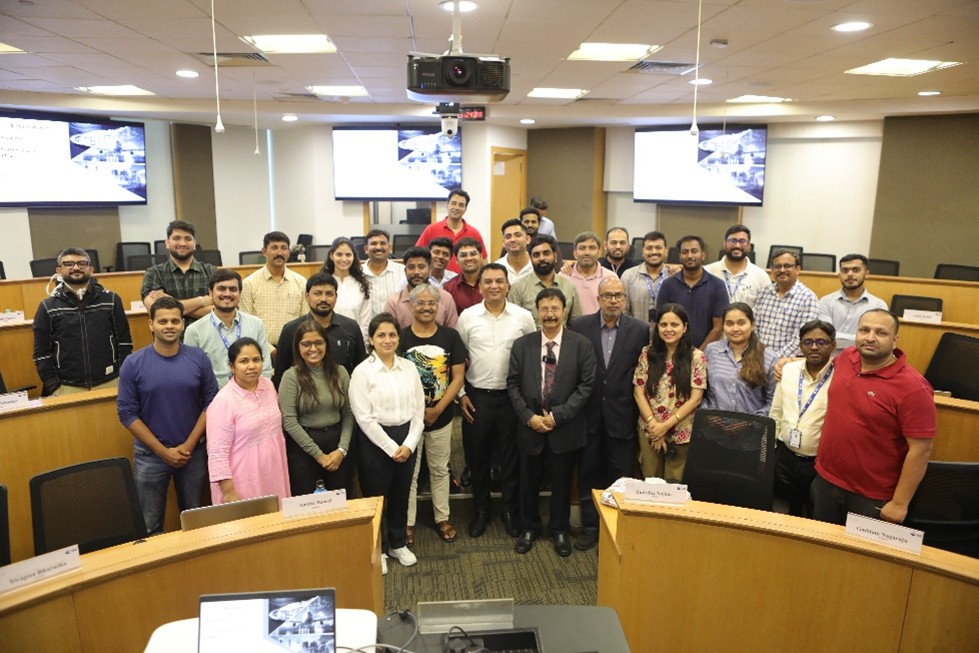
The final, fourth residency of ninth batch commenced at the Hyderabad campus from January 16 to January 25, 2026. During this residency, participants engaged in core courses focused on the infrastructure sector and presented their Action Learning Projects.
Co2026
Action Learning Projects
Multi-Modal Logistics in INDIA – A Path to $27 Trillion Economy by 2047

Team 1
Team Members:
- Husain Millwala
- Mangesh Dere
- Bharat Anand
- Mohammed Yousuf Aman Arif
- Rambabu Boorugu
Synopsis:
This Action Learning Project examines the pre-feasibility of establishing a Multi-Modal Logistics Park (MMLP) at Mandideep near Bhopal, Madhya Pradesh, highlighting its potential role in strengthening India’s logistics ecosystem. With logistics costs in India estimated at 13–14% of GDP, significantly higher than global benchmarks, the development of integrated logistics infrastructure is critical to improving supply chain efficiency and supporting India’s long-term economic growth ambitions.
Mandideep is a strategically located industrial hub within the Bhopal–Indore corridor, hosting more than 650 industrial units across sectors such as pharmaceuticals, engineering, agro-processing, plastics, and metals. The region benefits from strong connectivity through NH-46, proximity to Mandideep railway station on the Delhi–Chennai corridor, and access to Raja Bhoj International Airport, making it an ideal location for a logistics consolidation and distribution hub.
The study analyzes the policy and institutional framework, aligning the proposed project with national initiatives such as the National Logistics Policy (2022), PM Gati Shakti National Master Plan, Bharatmala, and Sagarmala programmes. It also incorporates global and Indian case studies, including the Dallas Logistics Hub (USA) and Jogighopa MMLP (Assam), to identify best practices in multimodal logistics development.
The report estimates a base freight demand of approximately 6.8 million tonnes per annum (MTPA) within the Mandideep catchment area, projected to increase to around 15 MTPA by 2035 under moderate growth scenarios. Currently dominated by road transport, the proposed MMLP is expected to facilitate a modal shift towards rail-based freight movement, improving efficiency, reducing congestion, and lowering environmental impact.
The proposed logistics park, planned over around 100 acres, will include key infrastructure components such as an Inland Container Depot (ICD) with rail siding, domestic and EXIM warehousing zones, cold chain facilities, container yards, truck parking and marshalling areas, and a multimodal interchange zone supported by digital systems like RFID, Transportation Management Systems (TMS), and automated weighbridges.
Overall, the project demonstrates how a well-planned MMLP at Mandideep can serve as a regional freight aggregation hub for Central India, supporting industrial growth, improving logistics efficiency, reducing costs, and contributing to the development of a modern, integrated logistics network in India.
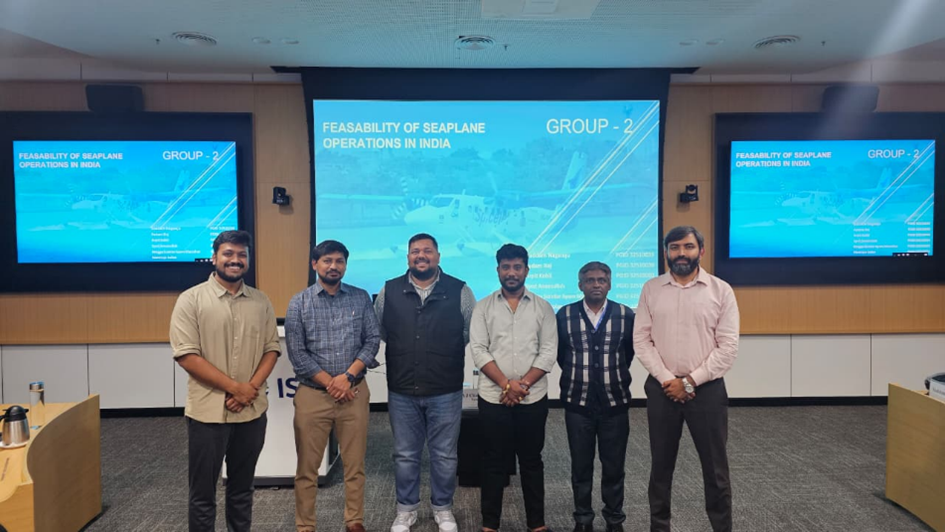
Feasibility of seaplane operations in India
Team 2
Team Members:
- Arpit Kohli
- Gaddam Nagaraju
- Maniteja Kolan
- Mogga Manohar
- Padam Raj
- Syed Amanullah
Synopsis:
This Action Learning Project examines the feasibility of introducing seaplane operations in India as an innovative solution to enhance regional and last-mile connectivity. With a coastline of over 7,500 km, numerous rivers, lakes, reservoirs, and island territories, India possesses significant natural potential for seaplane operations. The study evaluates whether seaplanes can be sustainably integrated into the country’s existing transportation ecosystem to improve accessibility to remote and tourism-driven destinations.
The project analyses multiple dimensions including technical feasibility, policy and regulatory frameworks, route suitability, financial viability, and socio-economic impacts. It highlights how seaplanes can operate using natural water bodies as runways, requiring comparatively lower infrastructure investment than conventional airports. This makes them particularly suitable for connecting coastal regions, island territories such as Andaman & Nicobar and Lakshadweep, inland waterways, and remote tourist locations.
The study also reviews global best practices from countries such as Canada and the Maldives, where seaplane services successfully support regional mobility and tourism-driven travel. In the Indian context, initiatives such as the UDAN (Ude Desh ka Aam Nagrik) regional connectivity scheme and the development of water aerodromes provide policy support for the sector. However, challenges remain, including regulatory complexity, multi-agency approvals, demand uncertainty, and high operational costs.
Through route-level case studies such as Kochi–Lakshadweep, Port Blair–Havelock, Sabarmati–Statue of Unity, and Vijayawada–Srisailam, the report evaluates potential operational models and travel-time advantages over existing modes. The analysis suggests that seaplane services can be financially viable on high-tourism and premium routes, particularly when supported through PPP structures, aircraft leasing models, and initial government subsidies.
Overall, the project concludes that seaplane operations in India are technically feasible and strategically beneficial, especially for tourism development, regional connectivity, and disaster response. With the right regulatory reforms, infrastructure planning, and public-private collaboration, seaplanes could emerge as a niche yet impactful component of India’s multimodal transport network.
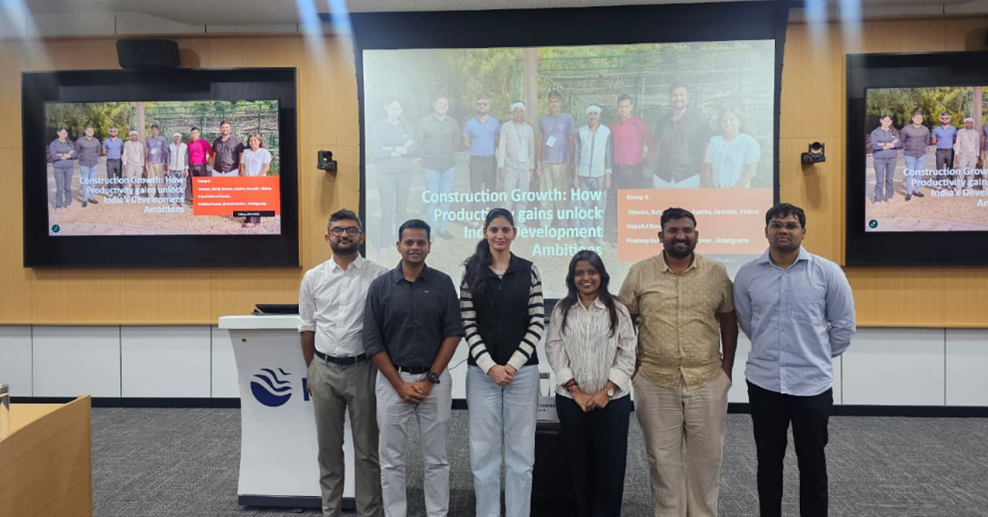
Construction Growth: How Productivity Gains Unlock India’s Development Ambitions
Team 3
Team Members:
- Aastha Bansal
- Manan Vyas
- Shweta Thakur
- Vishnuvardhan Mothkuri
- K Balaji Viswanath
- Saurabh Pawar
Synopsis:
This Action Learning Project explores the productivity challenges in India’s construction sector and their implications for achieving the country’s long-term development goals. As India moves toward its vision of becoming a developed economy by 2047, the construction and infrastructure sector plays a crucial role as the second-largest employer and a major contributor to Gross Value Added (GVA). However, despite its scale and importance, the sector faces a significant productivity gap compared to other industries.
The study identifies a structural productivity crisis, with the sector’s labor productivity index estimated at 0.78—about 22% lower than the national economic average. This gap is driven by several systemic challenges including fragmented project management practices, delays in land acquisition and regulatory approvals, reliance on informal labor markets, limited adoption of digital technologies, and adversarial contracting frameworks. These issues often lead to project delays, cost overruns, and inefficient resource utilization in infrastructure development.
Through global benchmarking, the project examines productivity improvement strategies adopted in countries such as the United Kingdom, Japan, Singapore, and the United States, highlighting practices like Building Information Modeling (BIM), digital project management, modular construction, and collaborative contracting models. Drawing on these insights, the report proposes a strategic transformation framework—referred to as the “Productivity Flywheel”—which focuses on four key levers: digital integration and data-driven project management, adoption of modern construction methods such as prefabrication, reform of procurement and risk-sharing models, and large-scale workforce skilling initiatives.
The project concludes that improving productivity in construction is essential for accelerating infrastructure delivery, reducing costs, and supporting national initiatives such as PM Gati Shakti and the National Infrastructure Pipeline. By embracing technological innovation, policy reforms, and human capital development, India can transform its construction sector into a high-productivity, technology-driven industry capable of supporting sustainable economic growth.
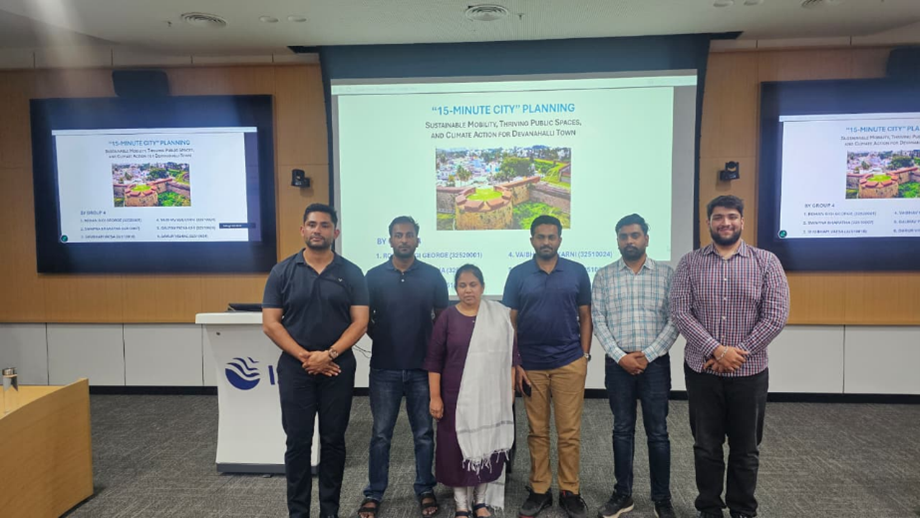
15-Minute City” Based Neighbourhood Planning in Bengaluru North
SUSTAINABLE MOBILITY, THRIVING PUBLIC SPACES
Team 4
Team Members:
- Darur Vishal
- Gaurav Patankar
- Rohan Gigi George
- Shubham Vatsa
- Swapna Bharatha
- Vaibhav Kulkarni
Synopsis:
This Action Learning Project explores the application of the “15-Minute City” planning concept in North Bengaluru, particularly focusing on Devanahalli, a rapidly growing suburb near Kempegowda International Airport. The study addresses the challenges arising from rapid urban expansion, including increasing travel distances, fragmented service distribution, and rising dependence on private vehicles. It proposes a data-driven planning framework aimed at creating walkable, self-sufficient neighbourhoods where essential services such as work, education, healthcare, retail, and recreation can be accessed within a 15-minute walk or cycling distance.
Using GIS-based spatial analysis, the study evaluates existing land-use patterns, infrastructure distribution, and accessibility to essential services across the Bengaluru North region. A hexagonal grid-based methodology was applied to map population density and the location of key amenities, enabling the identification of areas with insufficient access to services. The analysis revealed that accessibility gaps are primarily caused by uneven spatial distribution of amenities rather than a shortage of infrastructure, highlighting the need for better planning and service allocation.
The research also incorporates resident perception surveys using a Likert-scale framework, evaluating dimensions such as accessibility, recreation, inclusivity, sustainability, and future readiness. The findings suggest that Devanahalli shows strong public support and readiness for the 15-minute city model, though challenges remain in areas such as waste management, environmental quality, and pedestrian-friendly infrastructure.
To address these gaps, the project proposes integrated urban planning interventions, including mixed-use land development, improved pedestrian and cycling infrastructure, neighbourhood-level healthcare and service facilities, and enhanced last-mile public transport connectivity. A Policy–Plan–Project (3P) governance framework along with innovative financing approaches such as land value capture and public-private partnerships is recommended to support implementation.
Overall, the study demonstrates how proximity-based planning can guide sustainable urban growth, positioning Devanahalli and North Bengaluru as a model for inclusive, accessible, and environmentally sustainable neighbourhood development in rapidly urbanising Indian cities.
Enhancing Transparency and Efficiency in Real Estate Transactions
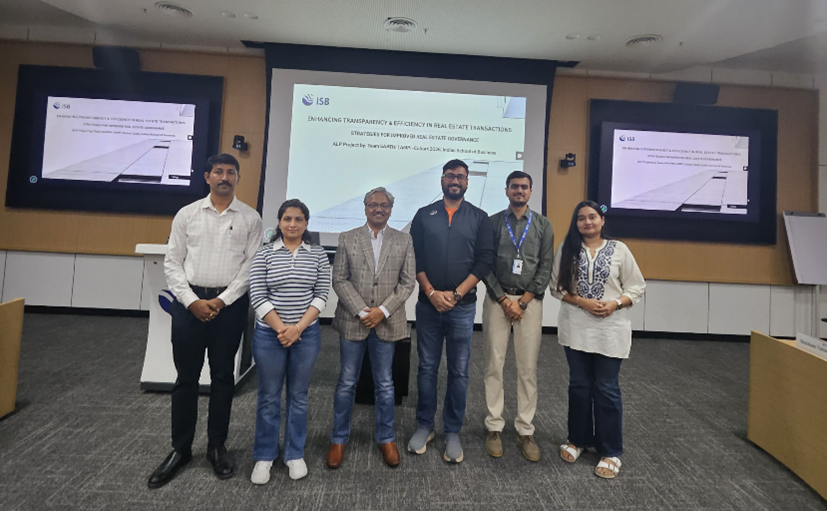
Team 5
Team Members:
- Aliyavar Gafur Inamdar
- Anshika Sharma
- Mayank Singh
- Naresh Gattupalli
- Prasanth Saraswatula
- Raghvendra Khemka
- Zuwaina Najam
Synopsis:
This Action Learning Project addresses the systemic trust deficit in India’s real estate ecosystem, where one of the country’s largest asset classes continues to face inefficiencies due to fragmented data systems and uncertain property ownership verification. Despite real estate accounting for around 77% of household wealth and contributing nearly 7–8% of India’s GDP, the sector remains highly complex, with property disputes forming a significant share of civil litigation and large volumes of land capital remaining underutilized.
The study identifies that the core challenge lies in India’s presumptive land titling system, where property registration records a transaction but does not guarantee ownership. As a result, buyers, banks, lawyers, and developers must repeatedly reconstruct ownership records from multiple fragmented sources such as Revenue, Registration, and Survey departments, leading to delays, higher transaction costs, and legal uncertainties.
To address this challenge, the project proposes PropVault, a digital trust architecture designed as a neutral verification layer for India’s real estate ecosystem. PropVault integrates existing Digital Public Infrastructure components such as ULPIN (Unique Land Parcel Identification Number), DigiLocker, Aadhaar authentication, and API-based data integration to consolidate property information into a verified and transaction-ready format. This platform enables stakeholders—including buyers, lenders, legal professionals, and developers—to access validated property intelligence in a single interface, reducing due diligence timelines and improving transparency.
Through stakeholder consultations, policy analysis, and ecosystem mapping, the project demonstrates how such a system could significantly reduce transaction costs, improve credit access, lower litigation risks, and unlock billions in real estate capital. Ultimately, the study highlights how a digital trust layer like PropVault can transform India’s property governance framework, enabling faster, safer, and more transparent real estate transactions while supporting broader goals of financial inclusion and sustainable urban development.
Punj Lloyd Institute of Infrastructure Management
Indian School of Business, Knowledge City,
Sector 81, Mohali 140306.


