
Vol.5, Issue 1, 2026
Infrastructure Quarterly

Punj Lloyd Institute of Infrastructure Management is established within the Indian School of Business as a specialist Institute to support its Infrastructure agenda. The Institute seeks to help create top-quality management capacity for the Infrastructure and Real Estate Sectors.
Vision
To create high-quality leadership and management capacity for the infrastructure and real estate sectors and create an understanding of the sustainability dimensions impacting the sectors, by delivering quality education, contextual research, and continuous outreach.
Mission

- Create top-quality educational and training programmes
- Facilitate learning through online programmes
- Undertake research that is contextual to the Indian and developing country context
- Develop tools and decision support systems to support the infrastructure practice
- Undertake continuous outreach to support the sector
- Serve as a "Go to" place for the infrastructure sector in India and abroad.
The Punj Lloyd Institute undertakes various initiatives to guide the infrastructure sector toward efficient and sustainable development through research initiatives, knowledge-sharing events, and training public officials and industry professionals. To meet its vision, the institute works closely with corporates in three verticals: Education, Outreach, and Research.
Education
Advanced Management Programme for Infrastructure: Co2027
The first residency of Advanced Management Programme for Infrastructure Co2027 commenced from 3 April to 12 April at the Mohali campus. During the residency, participants engaged in core courses focused on the infrastructure sector, took part in team-building activities, and began developing project charters for their Action Learning Projects. The residency provided a strong foundation for collaborative learning and practical application of concepts in the infrastructure domain.
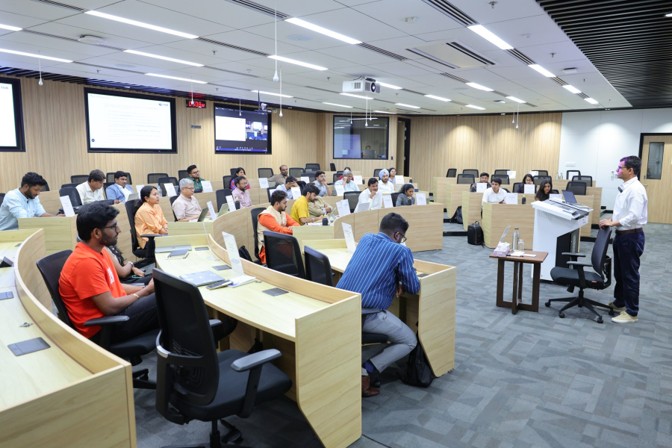
Faculty sessions and group interactions during Advanced Management Programme for Infrastructure Co2027 residency
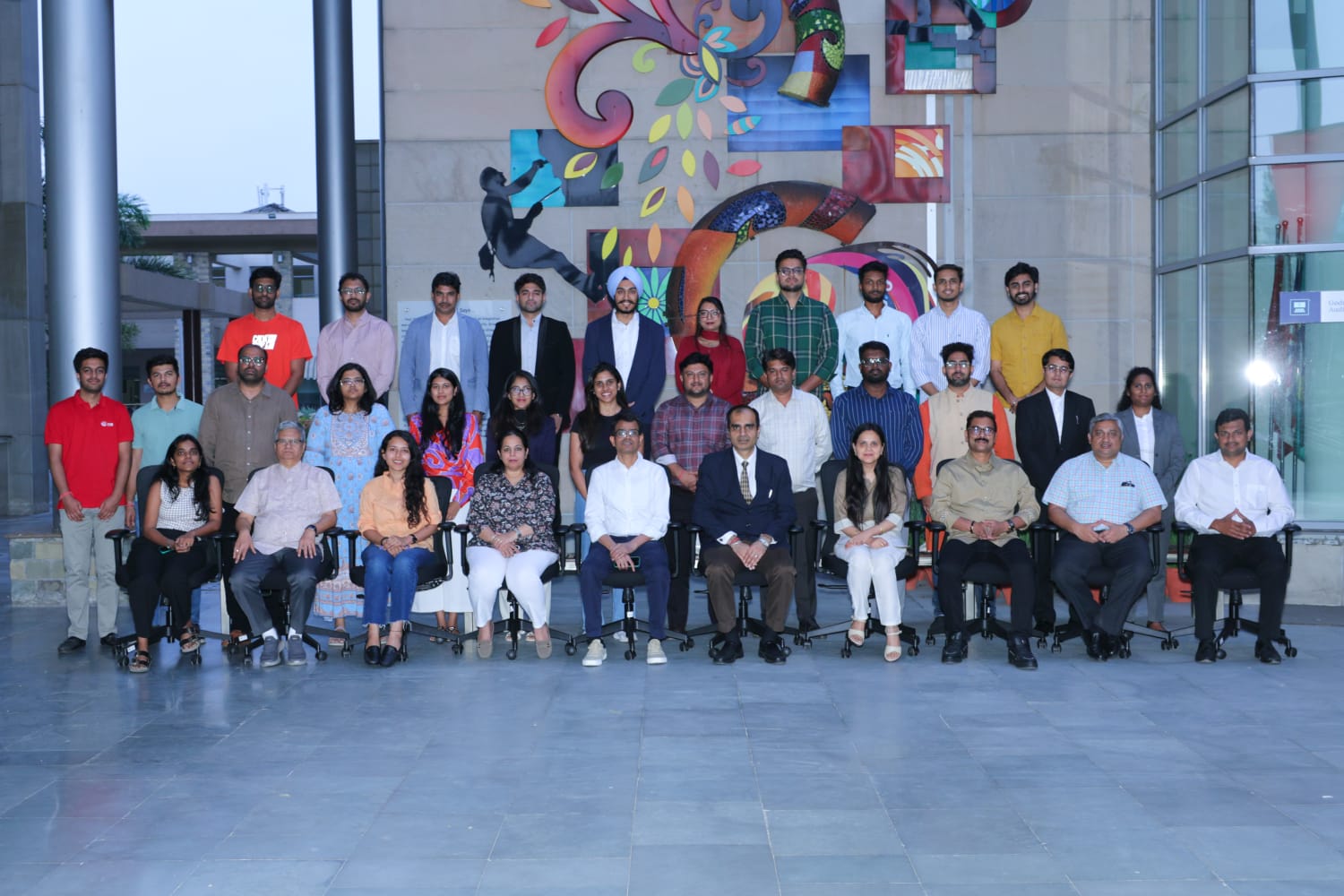
Team Building Activity —9 April 2026
The Advanced Management Programme for Infrastructure Co2027 class participated in an engaging team-building exercise facilitated by Amit Hans. The activity challenged participants to navigate constraints, balance competing priorities, and perform under time pressure — closely mirroring the complexities of real-world infrastructure projects. The exercise reinforced a key insight:
Successful infrastructure development depends not only on capital and resources, but on strong alignment, collaboration, and shared purpose among stakeholders.
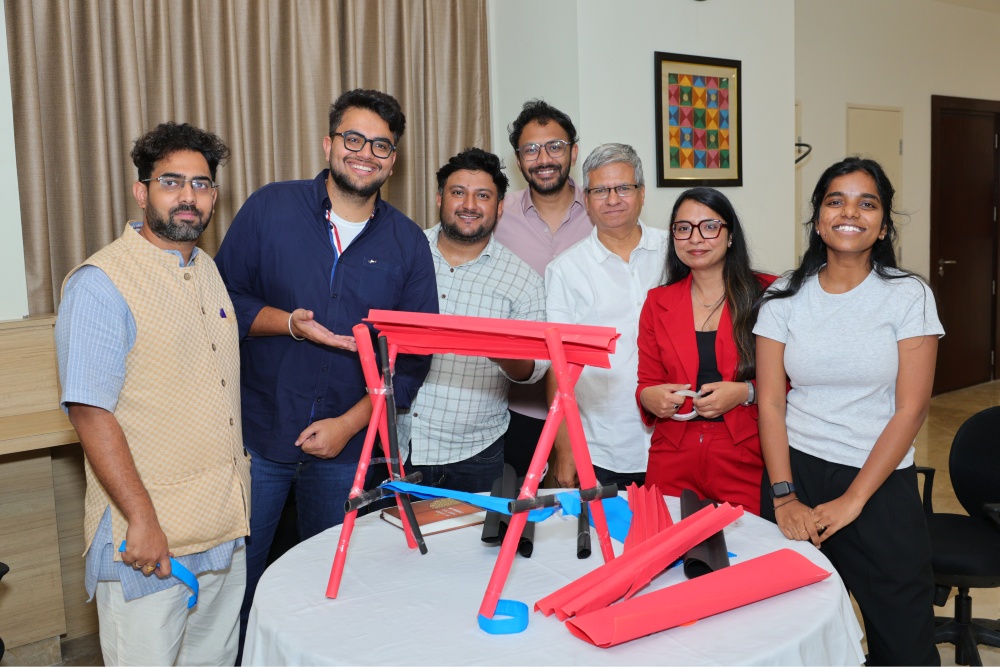
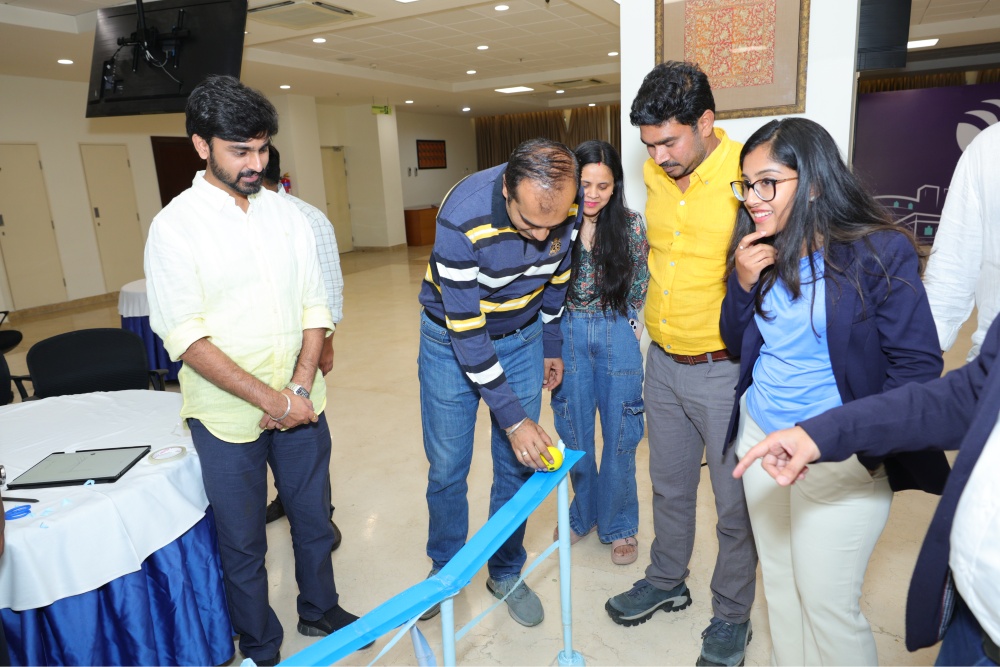
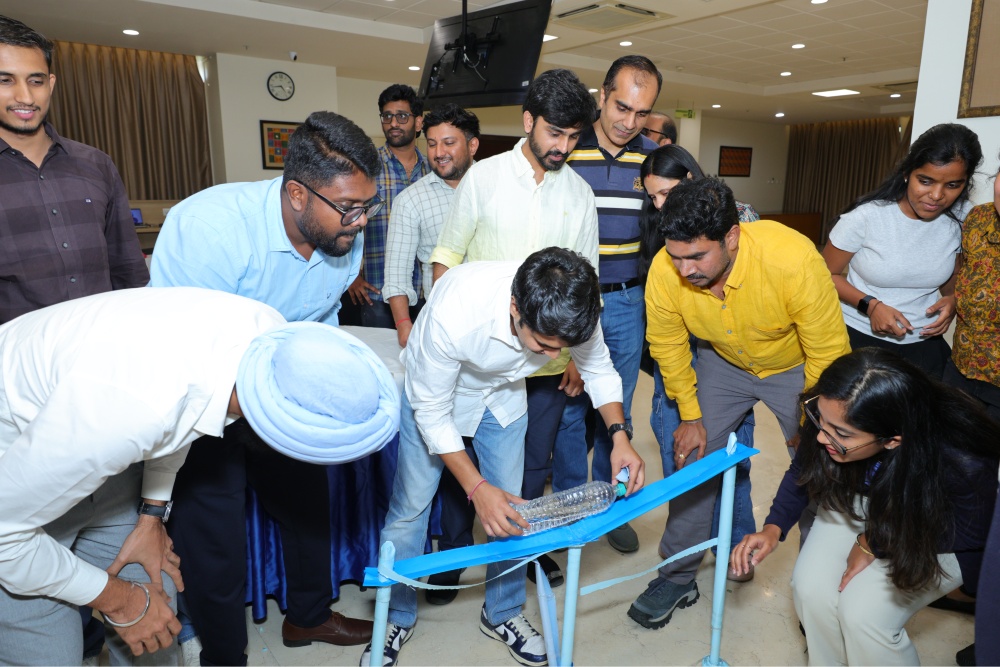
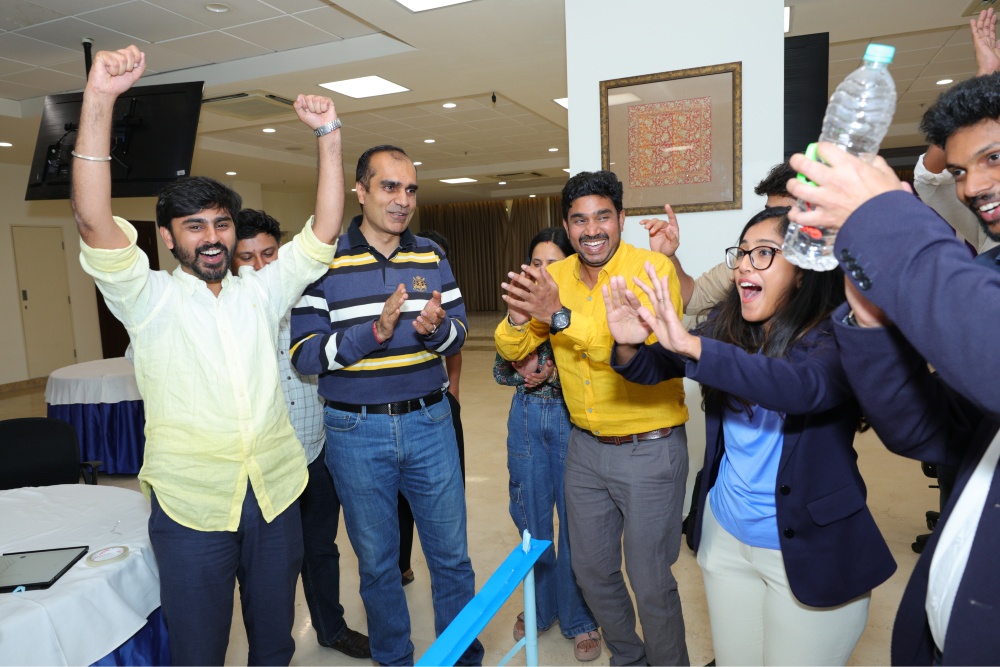
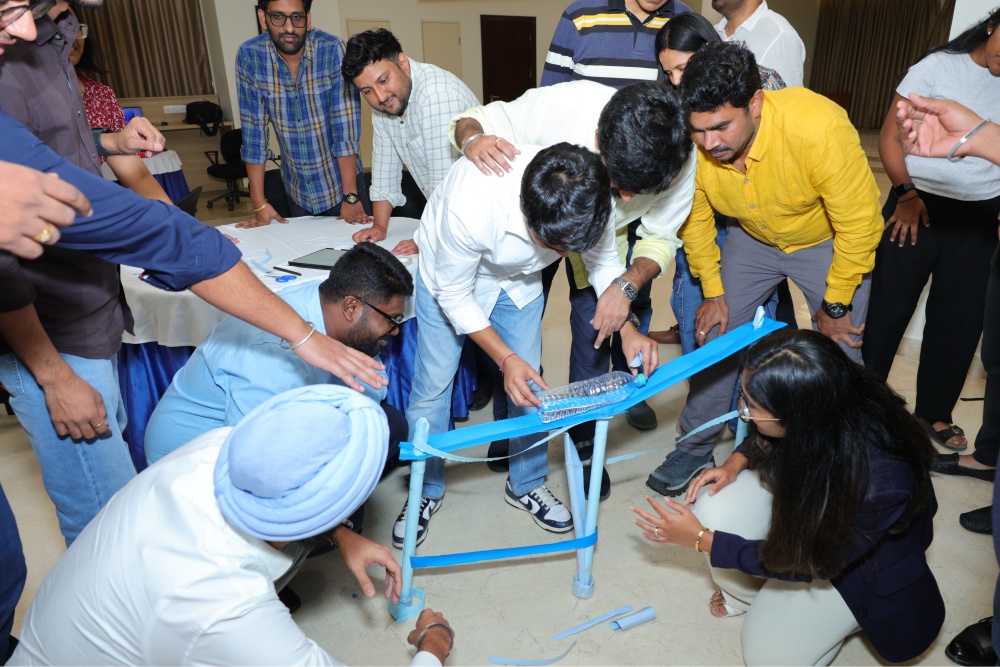
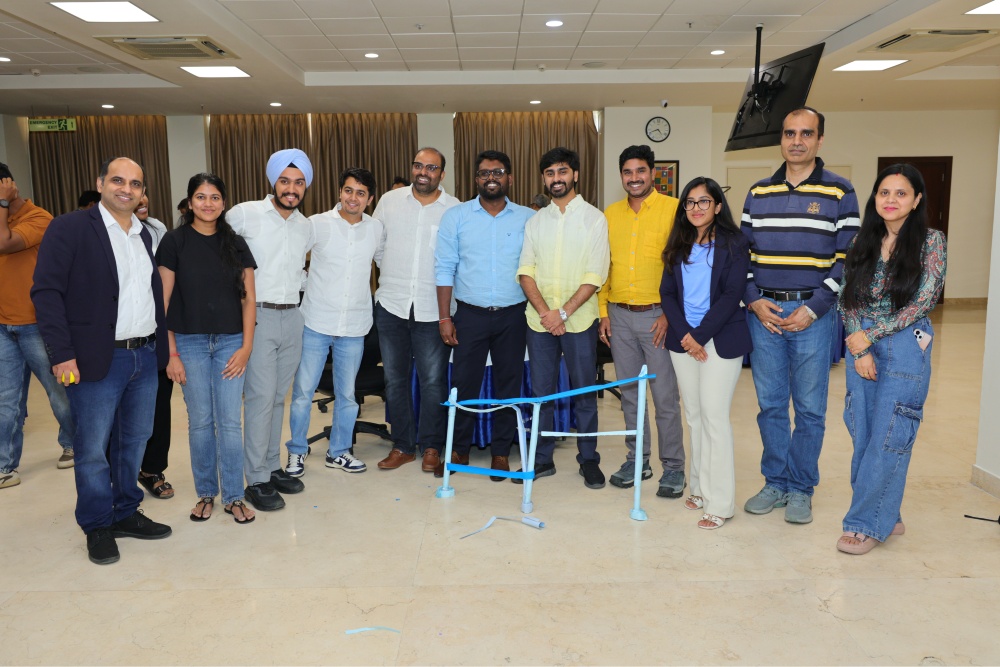
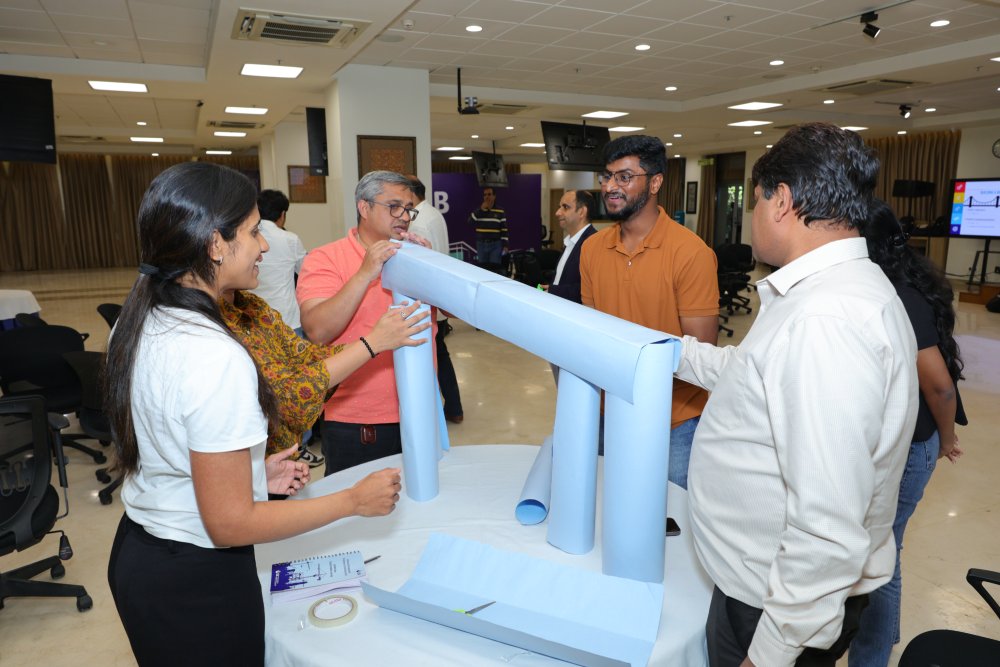
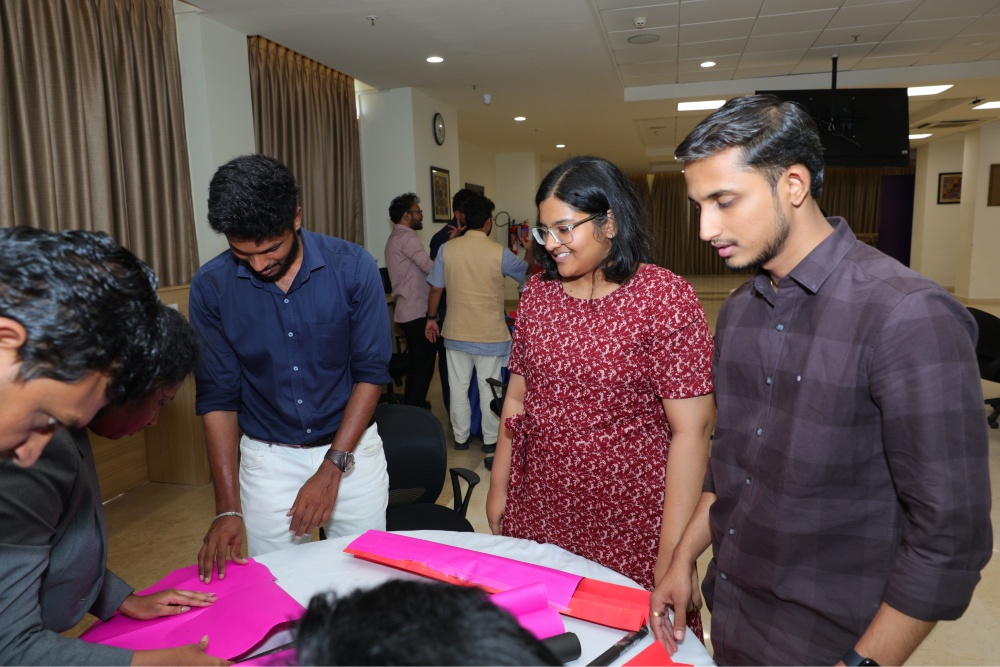
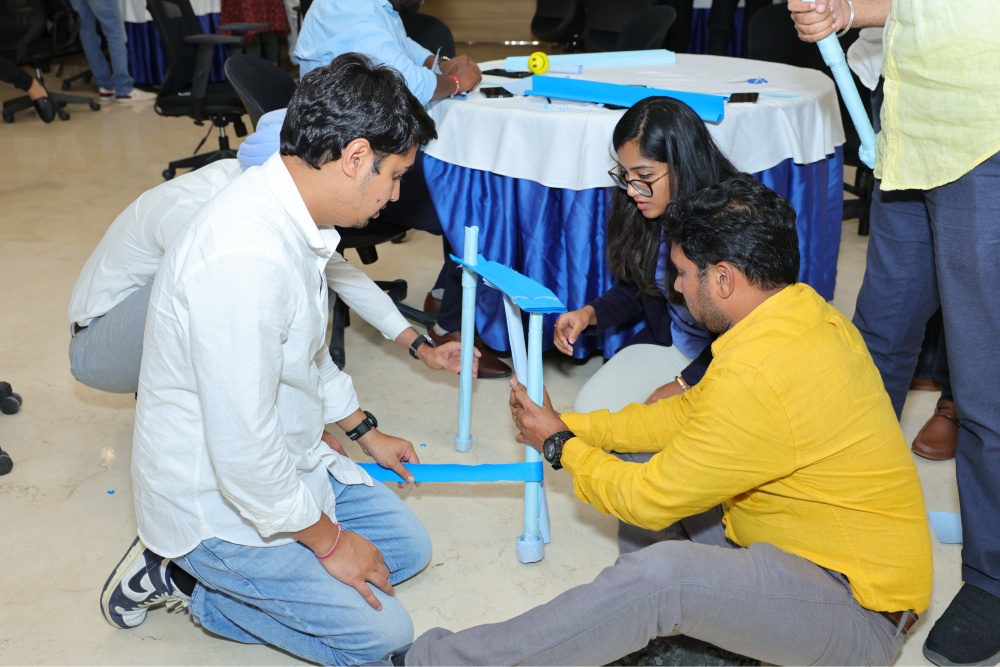
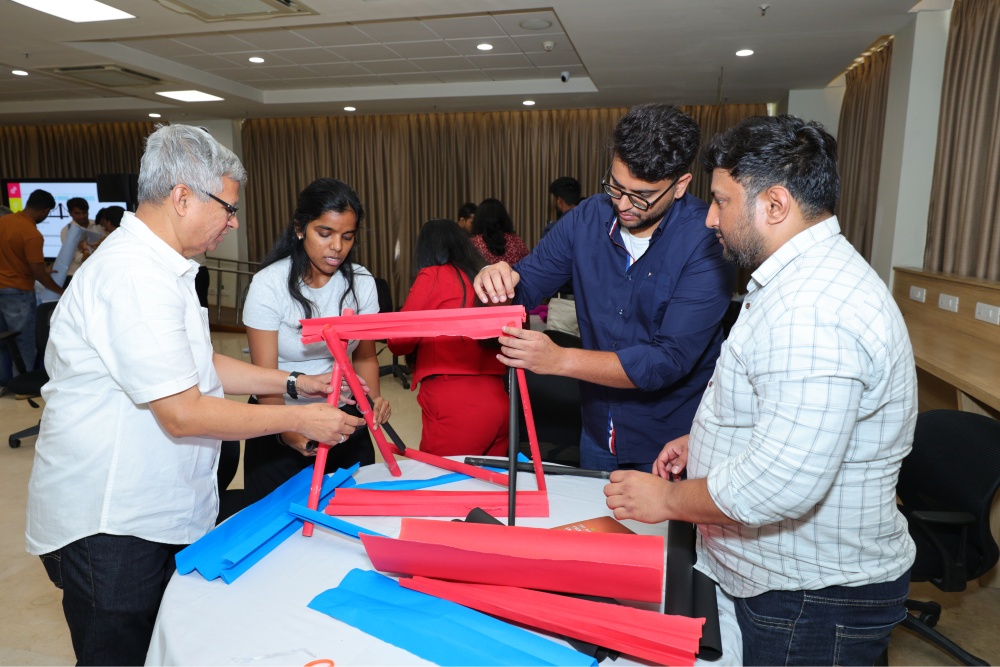
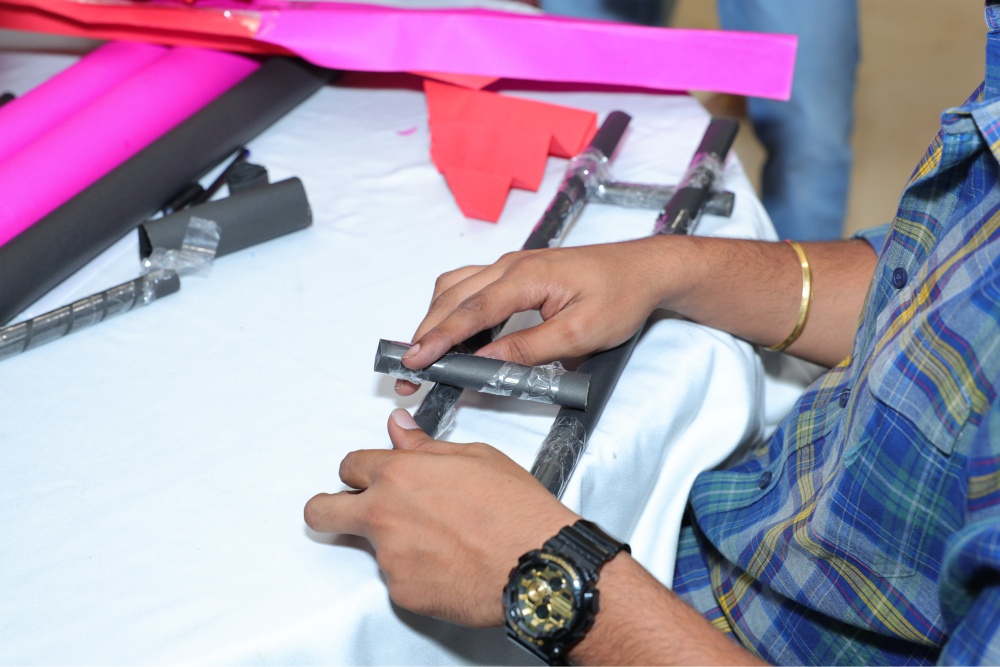
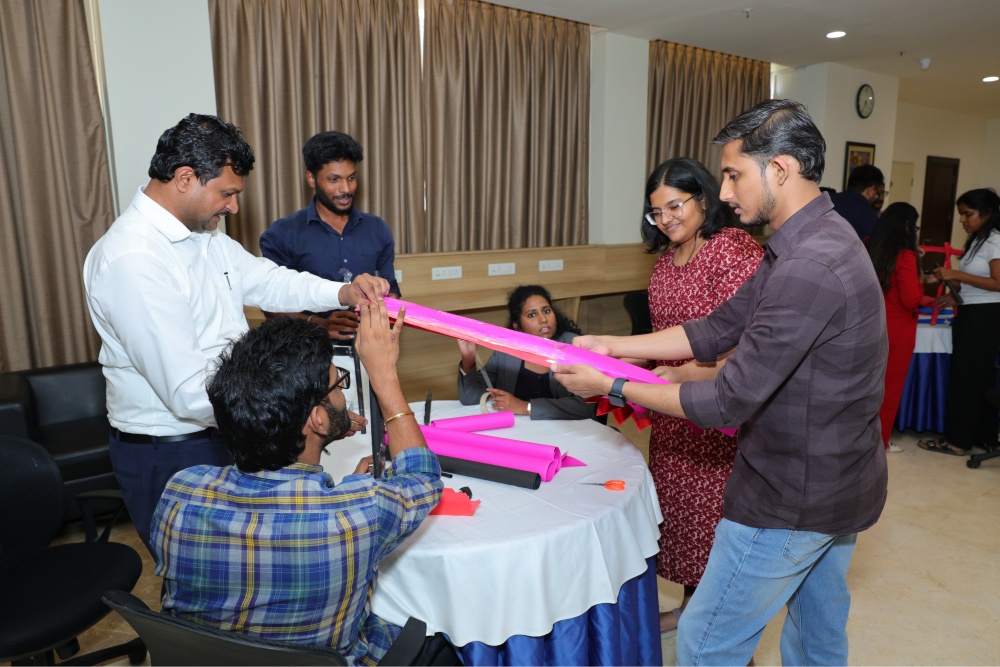
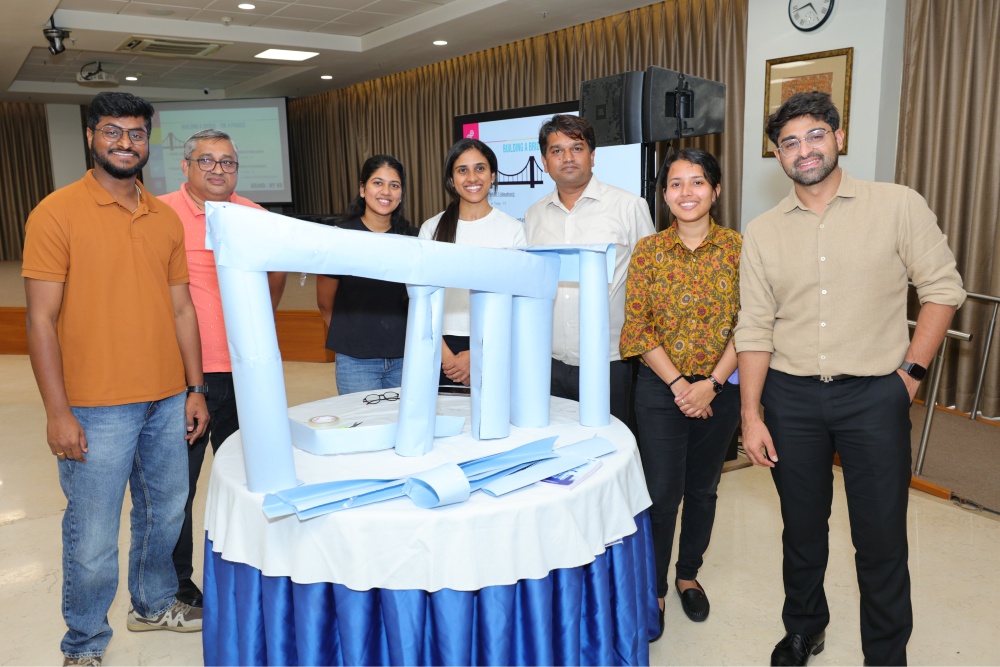
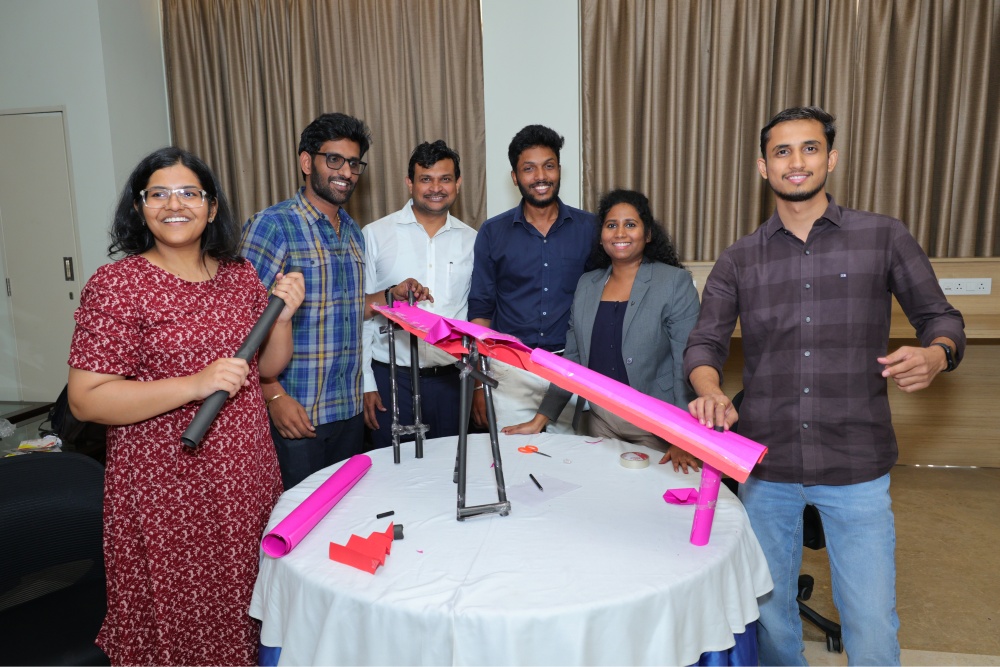
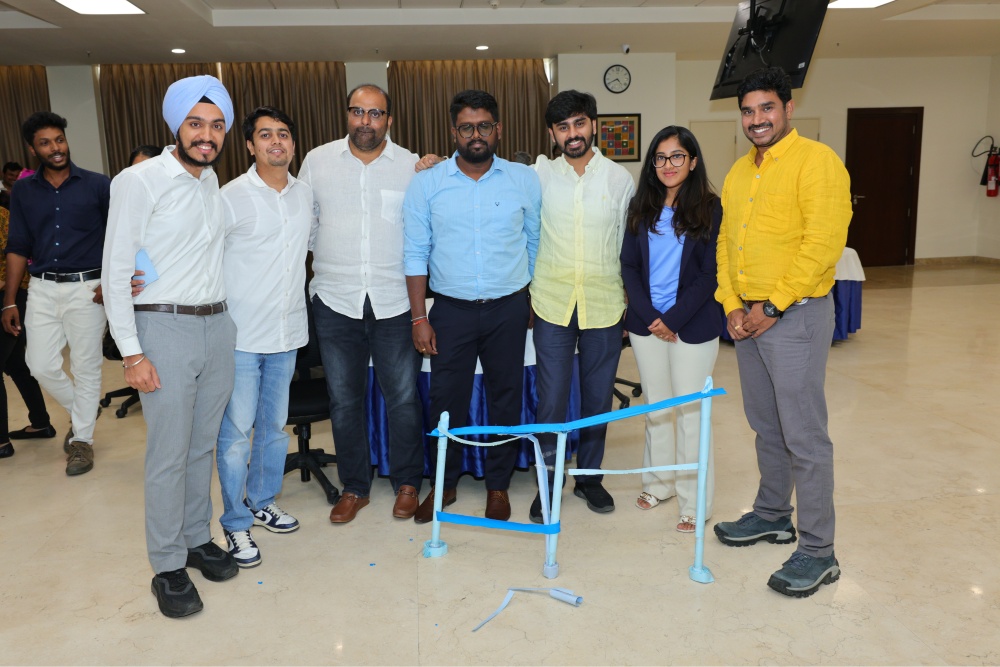
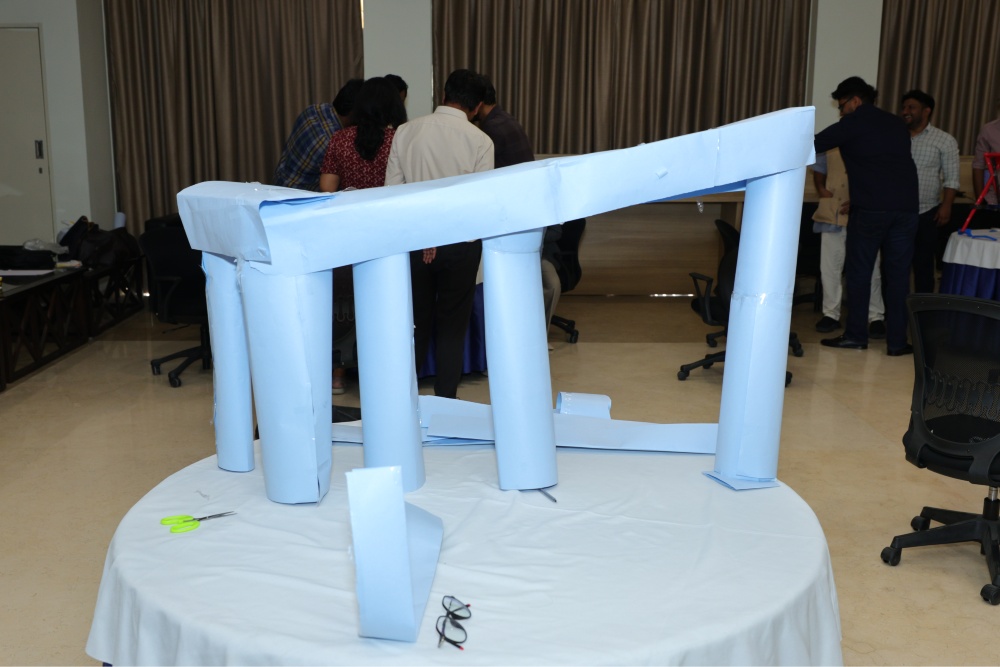
Team Building Activities by Advanced Management Programme for Infrastructure Co2027
Action Learning Projects – Advanced Management Programme for Infrastructure Co2027 Process
We have initiated the new Action Learning Project process for the current cohort Co2027. Four Action Learning Project teams have been formed, with each team comprising 6–7 participants. Faculty mentors have been assigned based on the nature of the project and their respective areas of expertise.
The Action Learning Project topics and faculty mentors are as follows:
- Reimagining Urban Drainage: From Nalas to Blue-Green Infrastructure in Hyderabad Faculty Mentor: Professor K. Venkatesh
- Unlocking Metro Value: A Tech-Enabled TOD and Last-Mile Integration Framework for Indian Cities Faculty Mentor: Professor O.P. Agarwal
- Empowering Infrastructure Companies by Designing a Value-Driven Real-Time Project Intelligence System to Enable Efficient Execution and Scalable Growth Faculty Mentor: Professor Nagadevara V
- Decision Intelligence System for Optimizing IRR in Mid-Segment Residential Real Estate Projects Using Lifecycle-Based Time–Cost–Cash Flow Simulation Faculty Mentor: Professor Athar Shahab
All Action Learning Project teams have made significant progress. Two review sessions have been successfully completed for each project The teams are currently refining their work based on the feedback received during the review process from the their mentors.
The project synopsis for all four Action Learning Projects are mentioned below for reference.
Action Learning Projects
Reimagining Urban Drainage: From Nalas to Blue-Green Infrastructure in Hyderabad
Team Members:
- Ramprasad
- Rama
- Vikas
- Prashanthi
- Mirra
- Bhavika
- Sandeep
Synopsis:
As part of their Action Learning Project under the guidance of Professor K. Venkatesh, Advanced Management Programme for Infrastructure participants are examining Hyderabad's stormwater drainage challenges and urban growth patterns. The team is analysing waterlogging hotspots, existing drainage networks, and traffic diversion mechanisms while exploring sustainable infrastructure solutions to improve urban resilience and flood management in the city. The project combines technical analysis with strategic urban planning to address critical challenges arising from rapid urbanization.
Unlocking Metro Value: A Tech-Enabled TOD and Last-Mile Integration Framework for Indian Cities
Team Members:
- Kautuk Walkade
- Abhishek Patil
- Arpanlal Jachuck
- Pranav
- Anshaz Chugh
- Aparna
- Madhukar
Synopsis:
Under the mentorship of Dr. O.P. Aggarwal, Advanced Management Programme for Infrastructure participants are undertaking an Action Learning Project focused on enhancing the financial sustainability of metro systems in India. As part of the project, the team has completed the problem identification, literature review, benchmarking, and case study analysis phases, examining metro financing challenges, non-fare revenue models, and land value capture strategies adopted by leading metro systems across India and globally. Drawing insights from cities such as Hong Kong, Singapore, London, New York, Delhi, Hyderabad, and Mumbai, the participants are developing a practical framework to help metro operators diversify revenue streams, strengthen financial viability, and support sustainable urban mobility.
Empowering Infrastructure Companies by Designing a Value-Driven Real-Time Project Intelligence System to Enable Efficient Execution and Scalable Growth
Team Members:
- Amit Mujumdar
- Gurvansh Singh Ghai
- Karan Singla
- Kimaya Sanjay Patil
- Lavanya L
- Prashant Khatwani
- Suvarnika Rani Chedalawada
Synopsis:
As part of their Action Learning Project, Advanced Management Programme for Infrastructure participants have undertaken a study to improve the efficiency of a major casting yard in Patna that supports one of India’s longest flyover projects. Under the mentorship of Professor Nagadevara V, the team has defined the project scope, identified key focus areas including cost, schedule, and risk management, initiated data collection from the project site, and explored project management and digital transformation tools such as MS Project and Project Libre. Through this work, the participants are developing practical frameworks to enhance operational efficiency and project performance in large-scale infrastructure development.
Decision Intelligence System for Optimizing IRR in Mid-Segment Residential Real Estate Projects Using Lifecycle-Based Time–Cost–Cash Flow Simulation
Team Members:
- Sravan
- Shivani
- Venkat
- Siddeshwar
- Lokesh
- Rajkamal
Synopsis:
As part of their Action Learning Project under the mentorship of Professor Athar Shahab, Advanced Management Programme for Infrastructure participants have initiated research on developing a Decision Intelligence System for optimizing financial performance in mid-segment residential real estate projects. The team has completed the project scoping and research design phase, assigned functional responsibilities, and commenced data collection and analysis across key areas including land acquisition, feasibility, finance, operations, marketing, and customer relationship management. The project aims to create a simulation-based framework that evaluates the impact of project execution decisions on cash flows, profitability, and Internal Rate of Return (IRR).
OUTREACH
INDUSTRY SESSION
Mr. Akhilesh Srivastava
President, International Road Federation IC & President, ITS India Forum
Topic: Digital Footprint of Modern Infrastructure
Date : 10 April,2026
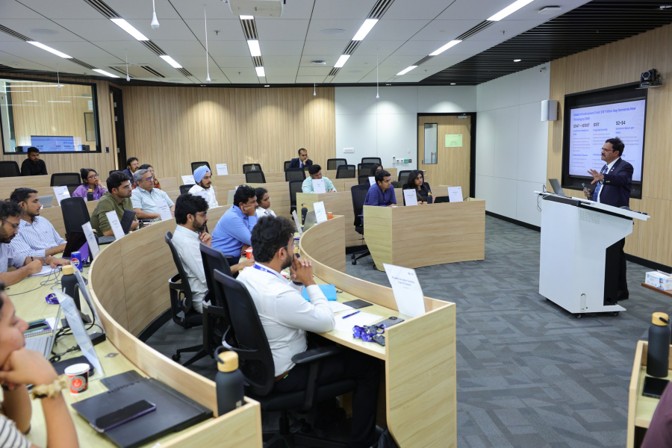
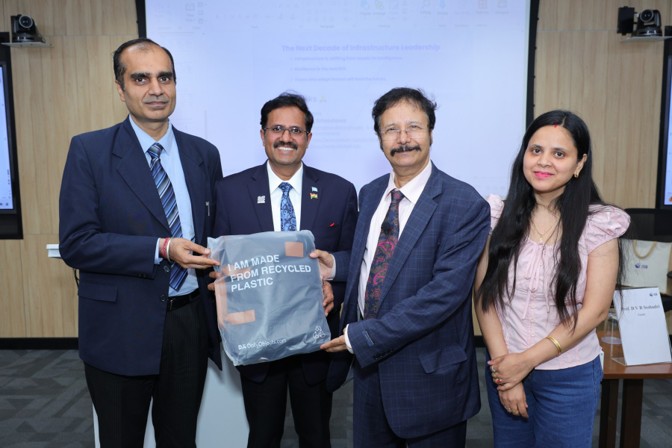
Guest session by Mr. Akhilesh Srivastava on the Digital Footprint of Modern Infrastructure
The guest lecture focused on the evolving role of infrastructure in a rapidly changing global environment, titled "Reimagining Infrastructure: From Scale to Intelligence." The session highlighted how infrastructure must move beyond traditional asset creation toward intelligent, data-driven, and adaptive systems.
Mr. Srivastava began by discussing the global infrastructure challenge, emphasising that by 2040 the world will require around $106 trillion in infrastructure investment, with a projected $15 trillion funding gap. He stressed that infrastructure should be viewed as an investment rather than an expenditure.
The session highlighted India's rapid infrastructure expansion, including the development of one of the world's largest road networks and major investments through the National Infrastructure Pipeline. These have contributed to improved logistics efficiency and economic competitiveness.
A key focus was the digital transformation of infrastructure, illustrated through FASTag and the NHAI Data Lake, enabling near-universal digital tolling and improved data-driven decision-making. Technology and data can transform infrastructure from reactive management to predictive, intelligent operations.
Next-generation solutions such as satellite-based tolling, AI-driven road safety systems, and digital governance platforms were highlighted as enhancers of transparency, efficiency, and user experience. Successful transformation requires ecosystem alignment, strong execution, and user-centric design.
Four Major Shifts — Infrastructure 2.0
| FROM | TO |
| Static Systems | → Dynamic Systems |
| Linear Networks | → Integrated Networks |
| Purely Physical | → “Phygital" Infrastructure |
| CapEx-Focused Models | → Lifecycle Value Optimisation |
ALUMNI SPOTLIGHT
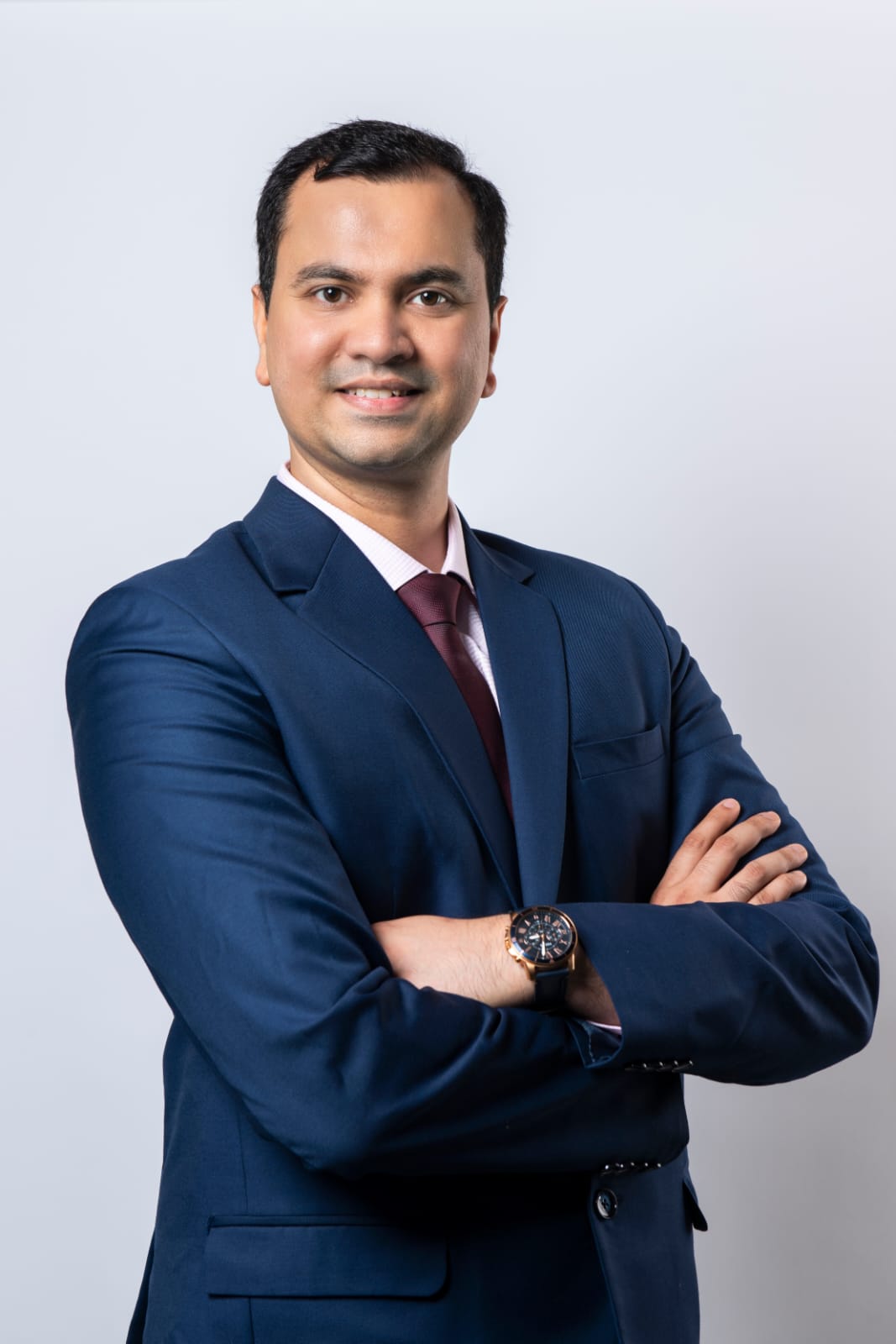
Madhava Sripada
Director — Business Development & Project Management
Colliers International | Mumbai, India
🏆 40Under40 Award — Realty Plus, 2025
I got the opportunity to work at prestigious Architecture and Interior Design firms such as RSP Design, Bentel Associates, and StudioHBA, where I had an active role in understanding client requirements and growing overall business across diverse segments and geographies. Recently I joined Colliers International as Director BD in Project Management, based in Mumbai for the Mid India region.
Growing diverse new businesses (multi-million-dollar deals) with new clients at Studio HBA, Bentel, and RSP Design Mumbai despite COVID times. Youngest BD Head in India at Bentel, contributing to two successive years of lifetime-high order bookings. Youngest BD Director in India at Studio HBA. Received the 40Under40 award from Realty Plus in 2025 among 120 participants.
This programme gave me a new bird's-eye view in understanding the big picture of Real Estate and Infrastructure. The course provides a panoramic view from the lens of Finance, Business Operations, Economics, Marketing, Regulatory, Contractual, and Legal frameworks, helping one understand how senior CXO management thinks with multiple hats when resolving live challenges.
Negotiations, Finance, and the Action Learning Programme had a profound impact on my personal and professional journey. Interactions with batchmates, guest speakers, professors, and other ISB students during campus interactions provided invaluable different points of view.
With volatile global geopolitical impacts, currency depreciation, and energy crises, there is a strong focus on the basics of project management and cost control. Our industry has immense scope to contribute towards sustainable development through technology enablement, smart mobility, and other interventions from the very conceptual design stage of projects.
Winning new business opportunities and increasing market share is most sought-after in any business. Reducing fees to win business may seem easy, but it is a hidden, unsustainable death spiral. It is critical to educate clients on the value proposition of services offered and maintain decent margins for sustainable growth.
The dynamics of Real Estate and Infrastructure are unique—it takes years of hands-on site experience overseeing complete project life-cycles. Communication, Coordination, and Collaboration are three important pillars in developing teams. The ability to anticipate possible problems and being prepared with mitigation plans is the true differentiator.
I look forward to making meaningful contributions to Real Estate and Infrastructure in the coming years and would like to guide professionals who are serious about career advice or growth opportunities.
UPCOMING PUNJ LLOYD INSTITUTE OF INFRASTRUCTURE MANAGEMENT MASTERCLASS 2026
The Punj Lloyd Institute of Infrastructure Management masterclass is scheduled for 10 July 2026 and will be delivered by Professor K. Venkatesh on the topic "Digital Transformation in Project Management."
This masterclass is being organized as a special industry outreach initiative aimed at engaging senior professionals and decision-makers from the infrastructure and real estate sectors. The event will serve as a platform for knowledge sharing, industry interaction, and fostering stronger connections with professionals interested in advancing their leadership and management capabilities in the infrastructure domain.
Punj Lloyd Institute of Infrastructure Management
Indian School of Business, Knowledge City,
Sector 81, Mohali 140306.


